Supply Chain Audit
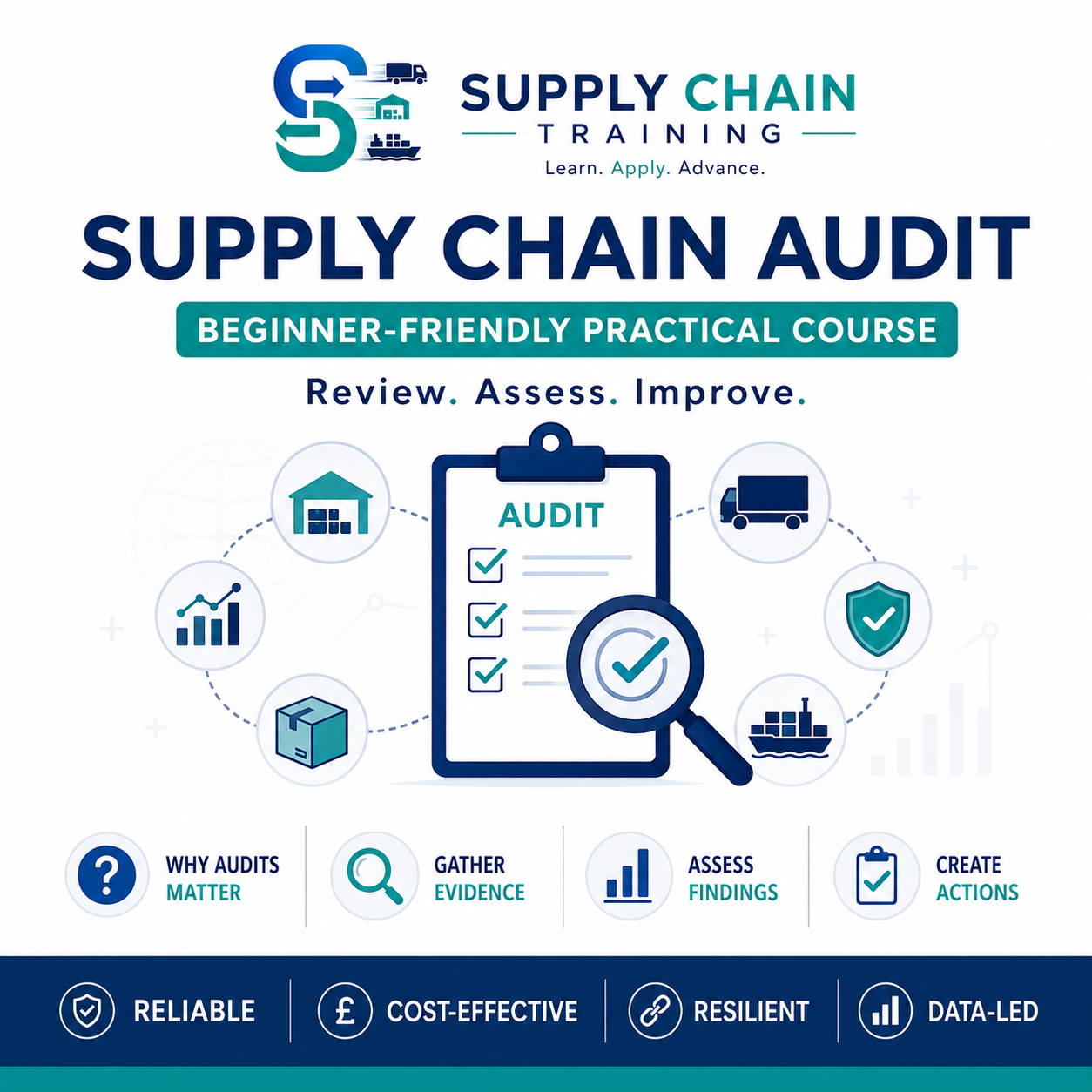
Learn how to conduct a practical supply chain audit. This beginner-friendly course explains how to review suppliers, inventory, warehousing, transport, planning, data and risk, then turn findings into clear improvement actions. Ideal for supply chain, logistics, procurement and operations learners.
Overview
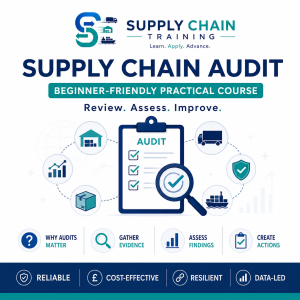
Supply Chain Audit is a beginner-friendly, practical course designed to help learners understand how to review, assess and improve supply chain performance. The course explains what a supply chain audit is, why audits matter, what areas should be examined, how evidence should be gathered, and how audit findings can be converted into practical improvement actions.
This course is suitable for learners who are new to supply chain management, as well as operational staff, supervisors, junior managers, procurement teams, logistics teams, warehouse staff, inventory planners, business improvement teams and small business owners who want to understand how to assess the health of a supply chain.
A supply chain audit is not simply a compliance check. Done properly, it helps an organisation understand whether its supply chain is reliable, cost-effective, resilient, ethical, data-led and fit for purpose. It can reveal hidden risks, poor processes, weak supplier controls, stock problems, capacity constraints, data quality issues and missed improvement opportunities.
By the end of the course, learners will be able to explain the purpose of a supply chain audit, identify the main areas to review, gather evidence, assess findings, prioritise risks and create a practical audit report.
Curriculum
- 4 Sections
- 24 Lessons
- 10 Weeks
- Section 1: Understanding Supply Chain AuditsThis section introduces the purpose of a supply chain audit. Learners will understand what an audit is, why supply chains need auditing, and how audits support performance, resilience, cost control and risk management.6
- Section 2: Planning and Preparing the AuditThis section explains how to prepare for a supply chain audit. Learners will understand how to define the audit objective, set the scope, identify stakeholders, prepare audit questions and gather initial information.7
- Section 3: Auditing Core Supply Chain AreasThis section explains how to audit the main areas of a supply chain, including suppliers, procurement, inventory, warehousing, transport, planning, systems and risk.7
- 3.1Lesson 3.1: Auditing Suppliers and Procurement
- 3.2Lesson 3.2: Auditing Inventory and Stock Control
- 3.3Lesson 3.3: Auditing Warehousing and Storage
- 3.4Lesson 3.4: Auditing Transport and Delivery
- 3.5Lesson 3.5: Auditing Planning, Data and Systems
- 3.6Section 3 Learner Activity
- 3.7Section 3 Knowledge Check3 Questions
- Section 4: Reporting Findings and Driving ImprovementThis section explains how to analyse audit evidence, write findings, prioritise actions and create a practical improvement plan.9
- 4.1Lesson 4.1: Analysing Audit Evidence
- 4.2Lesson 4.2: Writing Audit Findings
- 4.3Lesson 4.3: Prioritising Findings
- 4.4Lesson 4.4: Creating the Improvement Plan
- 4.5Lesson 4.5: Presenting the Audit Report
- 4.6Lesson 4.6: Turning Audit into Continuous Improvement
- 4.7Section 4 Learner Activity
- 4.8Section 4 Knowledge Check3 Questions
- 4.9Final Knowledge Assessment1 Hour10 Questions
Instructor

FAQs
Requirements
- No previous audit experience is required.
- Learners should have a basic interest in supply chain, logistics, procurement, warehousing, inventory or operations. The course is suitable for beginners and early-career professionals.
Features
- Beginner-friendly supply chain audit course
- Practical UK-focused examples
- Covers suppliers, inventory, warehousing, transport, planning and data
- Includes audit questions, learner activities and knowledge checks
- Final assessment and certificate text included
- Suitable for LearnPress and online self-study
Target audiences
- People new to supply chain, logistics, procurement or operations
- Warehouse, inventory and transport team members
- Junior supply chain managers and supervisors
- Business improvement and quality teams
- Small business owners managing suppliers and stock
- Learners preparing for further supply chain training
- Anyone asked to support or complete a supply chain review
You May Like
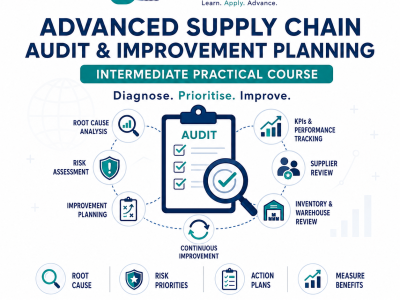
Advanced Supply Chain Audit & Improvement Planning
Take your supply chain audit skills to the next level. This practical follow-on course shows learners how to move from audit findings to root-cause analysis,...
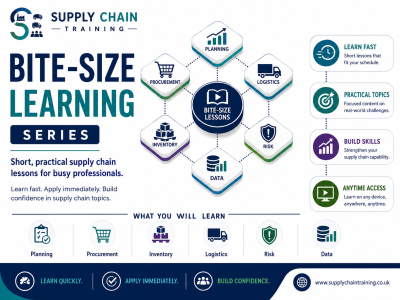
Introduction to Supply Chain Management – Bite-Sized Learning
Supply chains affect almost every product, service and organisation in the UK. From food on supermarket shelves to spare parts in engineering, uniforms in defence,...
Modelling Supply Chain Network Capacity
Modelling Supply Chain Network Capacity Capacity problems are one of the most common causes of supply chain service failure. A business may have stock, suppliers...
Using PESTLE Analysis to Improve Inventory Forecasting Algorithms
Forecasting Algorithms Modern inventory forecasting systems were built for a world where supply was assumed to be stable, predictable, and continuously available. That world no...
Course Features
- Lectures 24
- Quizzes 5
- Duration 10 weeks
- Skill level All levels
- Language English
- Students 3
- Assessments Self
A clear, practical and highly accessible course for anyone new to supply chain auditing. It explains how to review performance, gather evidence, identify risks and turn audit findings into meaningful improvement actions. Ideal for learners who want a structured, confidence-building introduction to supply chain assessment.