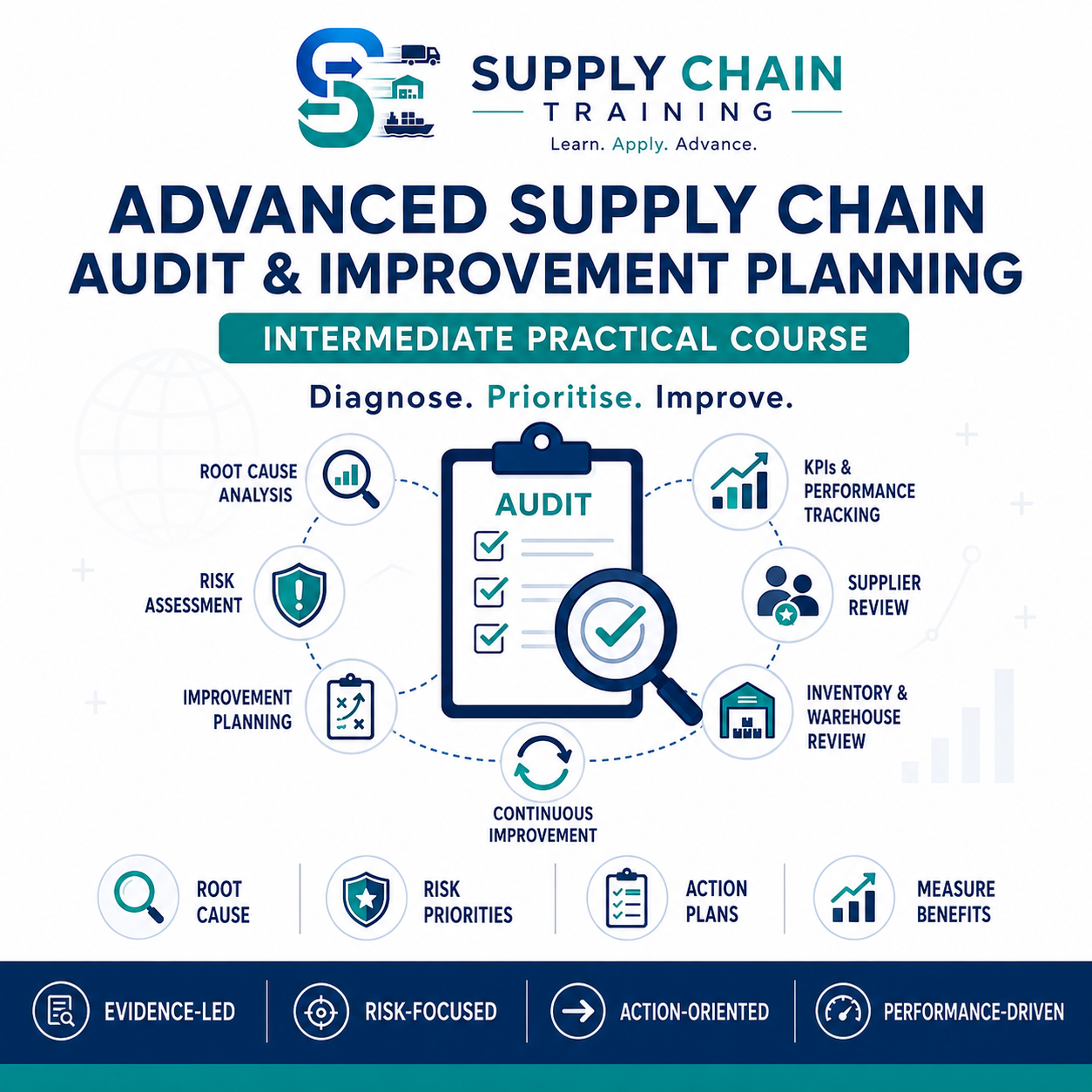
Advanced Supply Chain Audit & Improvement Planning
Take your supply chain audit skills to the next level. This practical follow-on course shows learners how to move from audit findings to root-cause analysis, risk prioritisation, improvement planning and measurable supply chain performance improvement
Overview
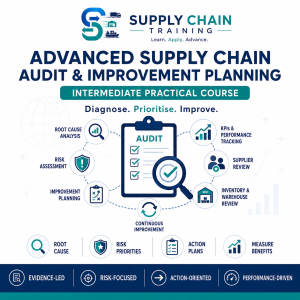
Advanced Supply Chain Audit & Improvement Planning is the natural follow-on course to Supply Chain Audit. The introductory course teaches learners how to understand, plan and conduct a basic supply chain audit. This advanced course takes the next step: it shows learners how to turn audit findings into root-cause analysis, risk prioritisation, practical improvement plans and measurable supply chain performance gains.
Many supply chain audits identify problems but fail to create lasting improvement. Reports are written, findings are discussed, and actions are listed — but months later, the same issues remain. Supplier performance is still inconsistent. Stock records are still unreliable. Warehouse bottlenecks still exist. Transport costs remain high. Data quality is still weak. The reason is often not poor auditing, but weak follow-through.
This course focuses on the bridge between audit and improvement. Learners will examine how to diagnose the real cause of supply chain problems, assess the level of risk, prioritise findings and build action plans that can be implemented in real operational environments.
The course is designed for supply chain, logistics, procurement, inventory, warehouse, planning, quality and business improvement professionals who want to move beyond basic audit checklists and develop more confident improvement planning skills.
By the end of the course, learners will be able to take audit findings and convert them into structured, evidence-led improvement plans that support better service, lower risk, stronger control and improved supply chain resilience.
Curriculum
- 4 Sections
- 24 Lessons
- 10 Weeks
- Section 1: From Audit Findings to Root CauseThis section teaches learners how to move beyond surface-level audit findings and identify the real causes of supply chain problems.7
- 1.1Lesson 1.1: Why Audit Findings Are Not Enough
- 1.2Lesson 1.2: Symptoms, Causes and Consequences
- 1.3Lesson 1.3: Using the 5 Whys
- 1.4Lesson 1.4: Fishbone Analysis for Supply Chain Problems
- 1.5Lesson 1.5: Writing Strong Root-Cause Statements
- 1.6Section 1 Learner Activity
- 1.7Section 1 Knowledge Check3 Questions
- Section 2: Supply Chain Risk and Control AssessmentThis section teaches learners how to assess the seriousness of audit findings by considering risk, impact, likelihood and control effectiveness.7
- Section 3: Building the Improvement PlanThis section teaches learners how to convert audit findings into practical, owned and measurable improvement actions.7
- 3.1Lesson 3.1: Why Improvement Plans Fail
- 3.2Lesson 3.2: SMART Supply Chain Actions
- 3.3Lesson 3.3: Prioritising Quick Wins and Strategic Improvements
- 3.4Lesson 3.4: Building a 30 / 60 / 90-Day Improvement Roadmap
- 3.5Lesson 3.5: Assigning Owners and Governance
- 3.6Section 3 Learner Activity
- 3.7Section 3 Knowledge Check3 Questions
- Section 4: Measuring Benefits and Sustaining ImprovementThis section teaches learners how to measure whether audit-led improvements have worked and how to embed continuous improvement into supply chain management.8
- 4.1Lesson 4.1: Why Benefits Measurement Matters
- 4.2Lesson 4.2: Choosing Supply Chain KPIs
- 4.3Lesson 4.3: Before and After Measurement
- 4.4Lesson 4.4: Creating a Management Summary
- 4.5Lesson 4.5: Embedding Continuous Improvement
- 4.6Section 4 Learner Activity
- 4.7Section 4 Knowledge Check3 Questions
- 4.8Final Scenario-Based Assessment60 Minutes10 Questions
Instructor

FAQs
Requirements
- Learners should have basic knowledge of supply chain auditing or should have completed the introductory Supply Chain Audit course.
Features
- Follow-on course from Supply Chain Audit
- Focuses on root cause, risk and improvement planning
- Includes practical supply chain examples
- Covers supplier, stock, warehouse, transport and data issues
- Includes scenario-based final assessment
Target audiences
- Supply chain professionals
- Supply chain planners and analysts
- Supply chain supervisors and junior managers
- Procurement and supplier management teams
- Inventory and planning teams
- Warehouse and transport managers
- Quality, assurance and business improvement teams
- Operations managers responsible for improvement actions
- Small business owners reviewing supply chain performance
- Anyone asked to turn audit findings into practical change
You May Like
Supply Chain Audit
Learn how to conduct a practical supply chain audit. This beginner-friendly course explains how to review suppliers, inventory, warehousing, transport, planning, data and risk, then...
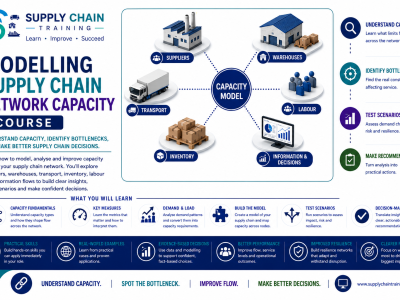
Modelling Supply Chain Network Capacity
Modelling Supply Chain Network Capacity Capacity problems are one of the most common causes of supply chain service failure. A business may have stock, suppliers...
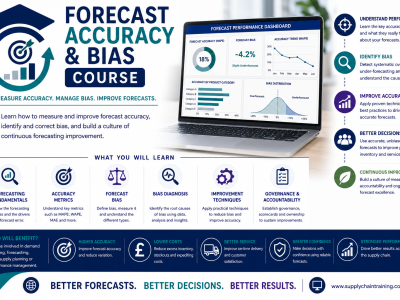
Forecast Accuracy & Bias
Course Description Forecasting sits at the centre of modern supply chain performance. Every inventory decision, supplier commitment, warehouse plan, transport booking, production schedule, staffing decision,...
Course Features
- Lectures 24
- Quizzes 5
- Duration 10 weeks
- Skill level All levels
- Language English
- Students 3
- Assessments Self
“A practical and valuable follow-on course that turns audit findings into real improvement. The root-cause, risk and action planning sections are especially useful for anyone responsible for improving supply chain performance.”