KPI v KRI: Measuring Performance, Managing Risk and Improving Supply Chain
KPI v KRI: Measuring Performance, Managing Risk and Improving Supply Chain Decisions is a practical online course designed to help learners understand the difference between Key Performance Indicators and Key Risk Indicators, and how both can be used to improve …
Overview
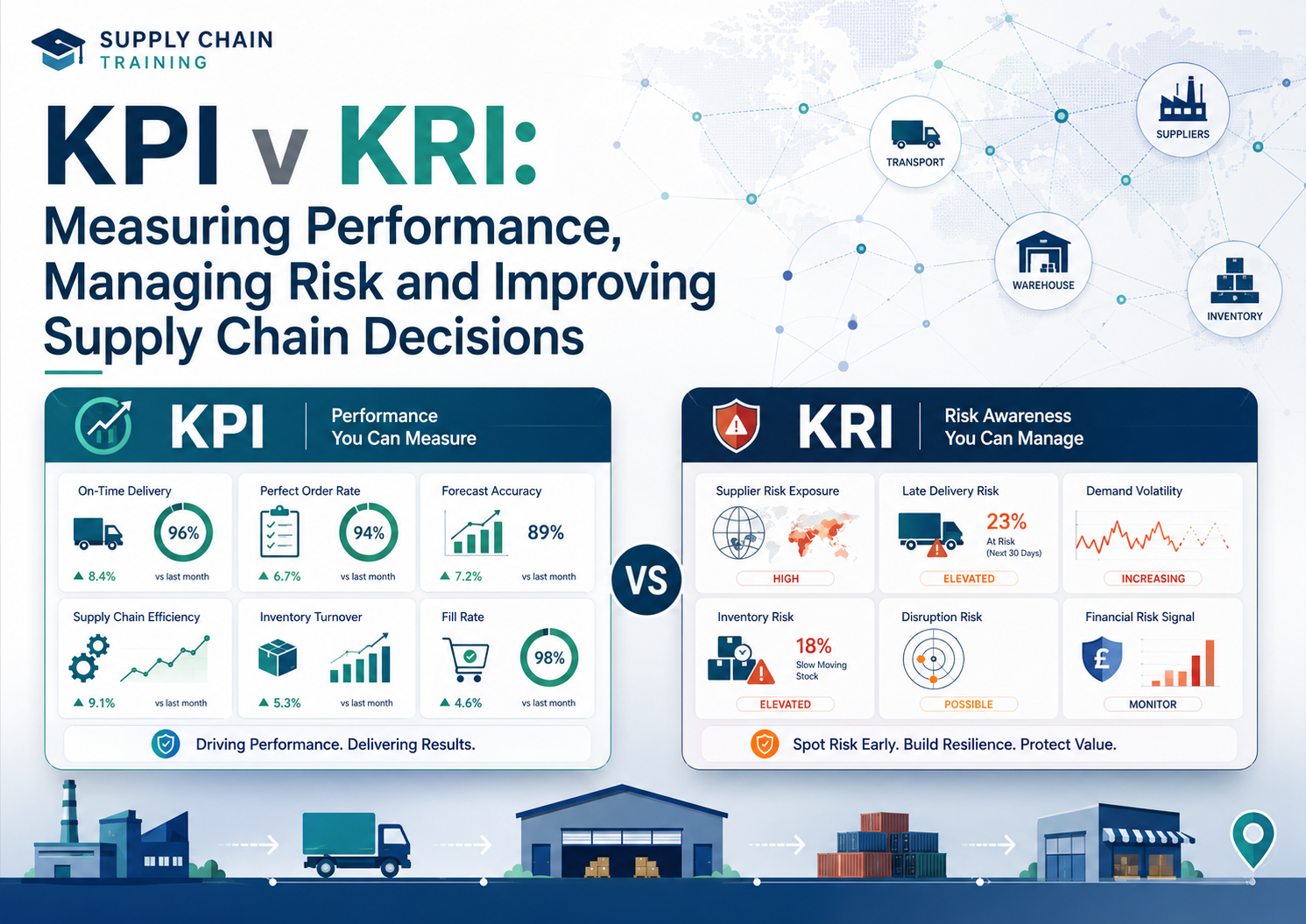
KPI v KRI: Measuring Performance, Managing Risk and Improving Supply Chain Decisions is a practical online course designed to help learners understand the difference between Key Performance Indicators and Key Risk Indicators, and how both can be used to improve supply chain decision-making.
Many organisations measure performance but fail to measure risk early enough. They may track delivery performance, stock availability, supplier service levels, warehouse productivity or procurement savings, but only discover emerging problems once service has already failed. This course explains how KPIs and KRIs work together: KPIs show whether the supply chain is performing as expected, while KRIs show whether there is increasing risk that future performance may deteriorate.
The course is suitable for supply chain professionals, logistics teams, procurement staff, inventory planners, warehouse managers, risk teams, business improvement teams, operations managers, assurance teams and small business owners who want a clearer way to monitor performance and prevent problems before they become failures.
Learners will explore how to select useful indicators, avoid poor measurement behaviours, design supply chain dashboards, interpret trends, and turn KPI and KRI evidence into practical improvement actions. The course uses supply chain examples throughout, including supplier performance, stock availability, forecast accuracy, lead time, transport reliability, data quality, warehouse capacity and operational resilience.
By the end of the course, learners will be able to explain the difference between KPIs and KRIs, identify where each should be used, design a balanced performance and risk measurement framework, and apply the results to improve supply chain control.
Curriculum
- 4 Sections
- 15 Lessons
- 10 Weeks
- Section 1: Understanding KPIs and KRIsSection Purpose This section introduces the core difference between Key Performance Indicators and Key Risk Indicators. It explains why both are needed in supply chain management and why relying only on performance measurement can leave an organisation exposed to emerging risks.5
- Section 2: Designing Good Supply Chain IndicatorsSection Purpose This section explains how to design effective KPIs and KRIs. Learners will explore what makes an indicator useful, why leading and lagging measures matter, and how to avoid common measurement mistakes.5
- Section 3: Applying KPIs and KRIs Across the Supply ChainSection Purpose This section applies KPI and KRI thinking to practical supply chain areas, including procurement, suppliers, inventory, forecasting, warehousing, logistics and capacity.5
- Section 4: Dashboards, Governance and Improvement ActionSection Purpose This section explains how to bring KPIs and KRIs together into a practical dashboard, how to interpret results, and how to turn measurement into improvement action.5
Instructor

Target audiences
- Supply chain professionals
- Supply chain planners and analysts
- Logistics and transport teams
- Procurement and supplier management teams
- Inventory planners and stock controllers
- Warehouse supervisors and managers
- Operations managers
You May Like
Supply Chain Assurance, Governance & Continuous Improvement
Supply Chain Assurance, Governance & Continuous Improvement is a practitioner-level course designed for learners who want to move beyond one-off supply chain audits and create...
Advanced Supply Chain Audit & Improvement Planning
Take your supply chain audit skills to the next level. This practical follow-on course shows learners how to move from audit findings to root-cause analysis,...
Supply Chain Audit
Learn how to conduct a practical supply chain audit. This beginner-friendly course explains how to review suppliers, inventory, warehousing, transport, planning, data and risk, then...
Inventory Management Fundamentals
Inventory is not simply stock sitting in a warehouse. It is a supply chain decision. Every item held in stock should have a reason, a...
Introduction to Supply Chain Management – Bite-Sized Learning
Supply chains affect almost every product, service and organisation in the UK. From food on supermarket shelves to spare parts in engineering, uniforms in defence,...
Course Features
- Lectures 15
- Quizzes 5
- Duration 10 weeks
- Skill level All levels
- Language English
- Students 0
- Assessments Self